

Week 26: Rebuilding after a midlife crisis
How Psalm 40 can help us rebuild after the inevitable crises we face in midlife
"I survived the crisis, now what?"
In the last post we talked about what to do in the immediate hours and days after a significant crisis confronts us in midlife. A quick, God-focused response to any crisis is the key to preventing longterm despair and bitterness. But once we've struggled through the initial shock and have fixed our eyes firmly on our Savior for guidance, we soon find ourselves wondering, "How do I recover from this?"
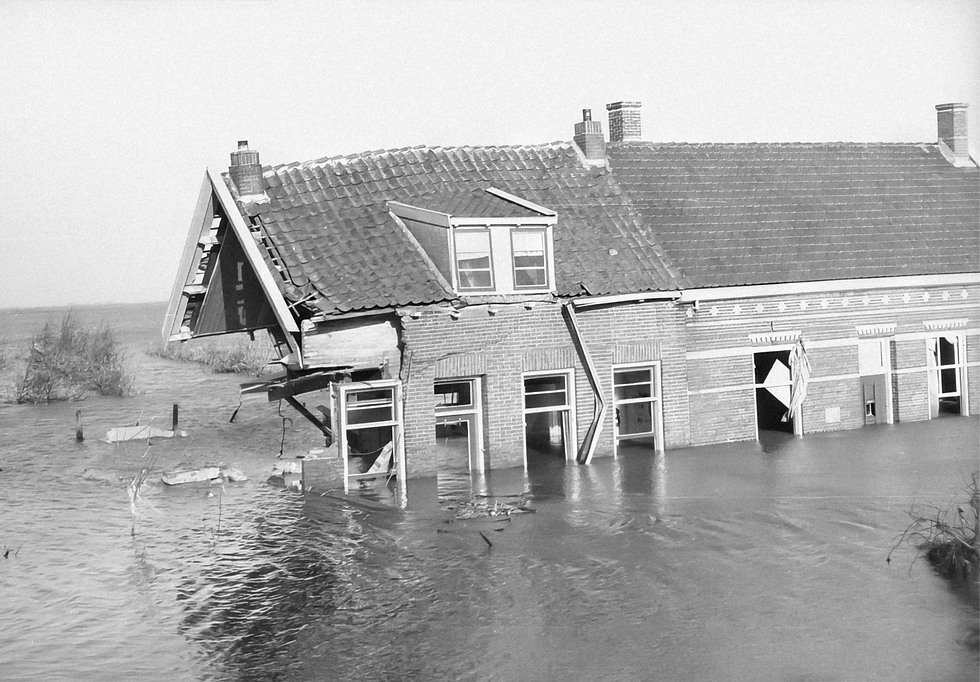
Great question! God wants to bring us through the valley of shadow and into rejoicing on the far side of each crisis we face, and Psalm 40 gives us some guidelines for getting there.
I waited patiently for the Lord;
he turned to me and heard my cry.
He lifted me out of the slimy pit,
out of the mud and mire;
he set my feet on a rock
and gave me a firm place to stand.
He put a new song in my mouth,
a hymn of praise to our God.
Many will see and fear the Lord
and put their trust in him.
Psalm 40:1-3, NIV
First, We Rest
The immediate crisis is over, but it's not time to spring into action. Instead, we choose to rest. David tells us in verse one that he "waited patiently for the Lord." The Hebrew word for waited patiently is not what we might do in a dentist's office. This is not waiting with dread, hoping that the experience will be over quickly with no complications and especially no pain!
Waiting in the biblical sense means resting in God's promise to care for His people. God may not answer immediately, but He will answer. When we rest in God's care for us and His unseen work on our behalf, we are putting our faith into action even though we aren't taking action on our own.
I will be the first to admit that this is a hard step to take. Doing nothing but rest in God's promises? How will that solve the probem? But this simple act of faith in God rather than ourselves is an essential discipline for responding to crises. Why? It places our focus on our Savior rather than ourselves. If we truly want the God of the universe to intervene on our behalf, we should know better than to delay that process by relying on ourselves. Instead, we reserve our strength while we watch expectantly for God to move. Because He will!
In His Time, We Rebuild
Notice the progression in verse two: "He lifted me out . . . He set my feet on a rock and gave me a firm place to stand." It's all about God's timing. He decides when to lift us out and He chooses the firm place where we make a new start. He establishes a foundation for us there that we can rebuild upon.
What is that foundation? It is simply the faithfulness of God. We don't rebuild on the restoration of our losses or the rectifying of our circumstances. We rebuild on the covenantal care of a Holy God for His people. David reminds us of this in verse four:
Blessed is the one
who trusts in the Lord,
who does not look to the proud,
to those who turn aside to false gods.
Psalm 40:4, NIV
Our bedrock foundation in life is the Lord. Rebuilding, then, means we focus on the basic spiritual disciplines of living in relationship with God--Bible reading, prayer, worship, fellowship. This is what builds our lives back after a crisis in midlife, and what gives us overflowing hope and joy as we look to the future.
Finally, We Rejoice
What's the final step in the journey through a "midlife crisis"? God gives us a fresh perspective. In verse 3, David testifies that God has given him a new song of praise. The idea here is not that God has rolled back time so David can go back to what was "normal" before the crisis. No, God has brought him through the crisis into a new and fresh appreciation for God's goodness, faithfulness and love. This new song could only be born from the journey through crisis. Walking through crisis with God leaves us changed, stronger, more convinced than ever of the worthiness of our God.
David expresses it like this:
I have proclaimed good news of righteousness in the great congregation;
Behold, I will not restrain my lips,
LORD, You know.
I have not hidden Your righteousness within my heart;
I have spoken of Your faithfulness and Your salvation;
I have not concealed Your mercy and Your truth from the great congregation.
Psalm 40:9-10, NASB
The new song David has received from God has made him a more effective witness to God's salvation. And it should do the same for us as well. Struggles give us proof of God's love, and we need to use them to share the good news about Jesus to those who don't know Him yet.
A politician once advised "Never waste a crisis!" When we walk faithfully through the crises of midlife and share our stories of God's faithfulness on the other side, we will understand better that God wants to use the hard things in our lives to draw others into relationship with Him. Crises are never wasted if we keep our eyes on Jesus.
The Everyday Midlife Crisis
In the last post, we talked through how to use Psalm 38 in a simple crisis: forgetting a coffee date with a friend. Let's finish the story by applying Psalm 40.

We left off with a phone call of apology to the hypothetical friend I left waiting at the coffee shop. What should I do after offering my sincere confession?
If you said nothing, you are right! That's because the next step is resting in the Lord. My friend may accept my apology and restore the relationship, and she may not. But that is between her and God--it's not up to me. So I pray and I wait expectantly for God to move.
Let's say she forgives me. That's a great outcome because we can easily rebuild our friendship on the foundation of mercy, just as God has shown each of us mercy individually. We might even rejoice together that we made it through that crisis by God's grace. We will probably even laugh about it in the future!
Midlife will bring us crises, like any stage of life does. But God is faithful to guide us through to the other side when we keep our eyes fixed on Him and wait for Him to move. Are you encouraged by this exploration of what Psalms 38 and 40 teach us about handling the inevitable challenges of midlife? If so, let me know in the comments and share your own story of rejoicing in how God brought you through!

Readings and Reflection Questions
Monday's reading: Psalm 40
Finish reading Psalm 40 today, How does trusting in the Lord, as emphasized in Psalm 40:4, help you rest in God’s timing rather than relying on human solutions when you are recovering from a crisis? In what ways can proclaiming God’s saving acts by sharing your story of God's faithfulness help you rebuild your life?
Tuesday's reading: Lamentations 3:19-26
What practical steps can you take to “wait quietly” for God’s salvation when you’re tempted to act impulsively post-crisis? How can you remind yourself daily of God’s “new every morning” compassion when you are in the process of rebuilding your life post crisis?
Wednesday's reading: 1 Peter 5:6-11
What anxieties do you need to cast on God as you rebuild your life on His grace, and how can you practically do this? How does knowing other believers face similar struggles encourage you to stand firm in faith and rejoice in God’s restoration?
Thursday's reading: Romans 15:5-13
How does the call to have the same attitude as Christ and accept one another encourage you as you rebuild from a crisis? How might you encourage others who are in their own time of rebuilding? How can trusting in the God of hope, as Paul concludes, fill you with joy, peace and hope?
Friday's reading: Psalm 41:1-4
How does showing regard for the weak help you in your own rebuilding process? Why do you think God wants us to focus on the suffering of others even when we are suffering ourselves?
Weekend reading: Psalm 41:5-13
How does David’s trust in God’s mercy amidst opposition encourage you to rest in God’s care when facing post-crisis challenges or betrayal? What does it mean to be “set in God’s presence forever” as you rebuild your life on His faithfulness after a crisis? How can you cultivate a heart of praise, like David’s, and rejoice in God’s deliverance despite ongoing adversity?


Comments